A 10-Minute Walk After Meals: Why This Chinese Habit Protects Your Digestion
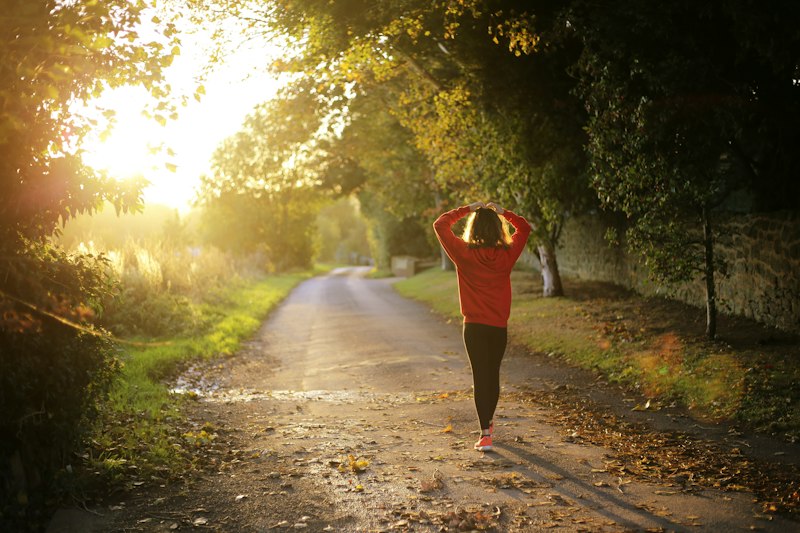
There is a well-known Chinese proverb that translates roughly to: "If you take a hundred steps after each meal, you will live to be ninety-nine." For generations, Chinese families have observed the ritual of a gentle stroll after dinner �not as exercise, but as a deliberate digestive practice. Now, modern science is catching up with this ancient wisdom, and the data is impressive: a short walk after eating may be one of the most powerful, low-effort health habits you can adopt.
The Chinese Philosophy of "Fan Hou Bai Bu Zou"
The phrase "fan hou bai bu zou" �"walk a hundred steps after eating" �has been a cornerstone of Chinese lifestyle medicine for centuries. In TCM theory, the digestive system is governed by the spleen and stomach, which together transform food into qi (energy) and blood. After eating, the digestive "fire" is active, and gentle movement is believed to help distribute that freshly generated energy throughout the body while preventing the stagnation that leads to bloating, indigestion, and acid reflux.
Dr. Zhang Li, a practitioner of integrative medicine at Shanghai's Longhua Hospital, explains: "In Chinese medicine, we say 'movement generates yang.' After eating, the stomach needs gentle stimulation to process food efficiently. A leisurely walk provides exactly the right amount of movement �enough to aid digestion without diverting energy away from it."
The Science: Blood Sugar Control
The most compelling evidence for post-meal walking comes from research on blood glucose regulation. A meta-analysis published in Diabetes Care in 2024 examined 23 studies involving over 1,800 participants and found that walking for just 10-15 minutes after a meal reduced post-meal blood sugar spikes by an average of 22% compared to remaining seated.
The mechanism is straightforward: when you walk, your muscles contract and consume glucose from the bloodstream without requiring additional insulin. This "non-insulin-dependent glucose uptake" is remarkably efficient �active muscles can take up glucose at rates up to 20 times higher than resting muscles. For the 537 million adults worldwide living with diabetes, and the millions more with prediabetes, this is a game-changing finding.
A 2025 study in the Journal of Clinical Endocrinology & Metabolism was even more specific: walking after dinner (as opposed to before or between meals) produced the greatest reduction in both blood glucose and insulin levels, with effects lasting up to three hours after the meal.
Case Study: Priya, 58, from Singapore
Priya Nair, a 58-year-old office manager in Singapore, was diagnosed with prediabetes in early 2024. Her fasting blood sugar was 110 mg/dL, and her HbA1c was 6.1% �just below the diabetic threshold. "My doctor told me I had six months to turn things around or I would need medication," she recalls.
Priya didn't have time for a gym membership, and her work schedule made major lifestyle changes difficult. Her doctor suggested one simple habit: a 15-minute walk after each of her three main meals. "I thought, 'That's it? Just walking?' But I committed."
She started with lunch �her coworkers joined her for a loop around the office building. Dinner walks became a family activity with her husband. Within three months, her fasting blood sugar had dropped to 92 mg/dL. At six months, her HbA1c was 5.5% �back in the normal range. "My doctor said she had never seen such a turnaround from one simple change. I've kept the habit �it's become my favorite part of the day."
Beyond Blood Sugar: The Full Digestive Picture
Post-meal walking benefits digestion through multiple pathways:
- Accelerated gastric emptying: A 2023 study in Neurogastroenterology & Motility found that a 15-minute walk after a meal sped up the rate at which food left the stomach by 27% compared to sitting, reducing feelings of fullness and bloating.
- Reduced acid reflux: Standing and walking use gravity to keep stomach contents where they belong. A 2024 study in Gastroenterology showed that staying upright and walking after meals reduced acid reflux episodes by 35% compared to reclining.
- Improved gut motility: The gentle rhythmic motion of walking stimulates the migrating motor complex, the pattern of smooth muscle contractions that sweep residual food through the intestines.
- Lower triglyceride response: A Japanese study found that walking after a high-fat meal blunted the postprandial triglyceride surge by 72% compared to resting �significant given that elevated post-meal triglycerides are an independent risk factor for cardiovascular disease.
How to Do It Right
The key word is "gentle." This is not a power walk or a workout �it is a leisurely stroll. Here are the guidelines:
- Timing: Start walking 5-10 minutes after finishing your meal. Wait just long enough for the initial feeling of fullness to settle.
- Duration: 10-15 minutes is ideal. Research suggests the blood-sugar-lowering benefits plateau after about 15 minutes, so there is no need to go longer.
- Pace: A relaxed, conversational pace �around 2-3 mph or 3-5 km/h. You should be able to talk comfortably.
- Posture: Stand tall with shoulders back. Good posture supports optimal digestive function by giving your abdominal organs room to work.
- After dinner is most important: While walks after any meal are beneficial, the evening meal tends to be the largest and is followed by the longest period of inactivity. A post-dinner walk provides the greatest metabolic benefit.
A Note on Intensity
It is worth emphasizing: vigorous exercise immediately after eating is counterproductive. High-intensity activity diverts blood flow away from the digestive organs toward working muscles, which can cause cramping, nausea, and impaired digestion. The Chinese tradition specifically emphasizes a "hundred steps" �gentle, unhurried movement. Save your gym session, run, or HIIT workout for at least 1-2 hours after a heavy meal. This distinction is where many Western fitness recommendations go wrong �they fail to differentiate between digestive walks and exercise.
The Bottom Line
The post-meal walk may be the most underrated health habit in existence. It requires no equipment, no special skills, and no extra time �just a willingness to step outside for 10 minutes. It lowers blood sugar, speeds digestion, reduces reflux, and provides a natural transition between meals and the activities that follow. Whether you are in New York, Nairobi, or New Delhi, the Chinese proverb holds true: walk a hundred steps after eating, and your body will thank you for the rest of your life.
Comments (0)
Comments loading... (Connect Disqus or Giscus to enable)