Seasonal Eating: The Chinese Wisdom of Eating According to Nature's Calendar
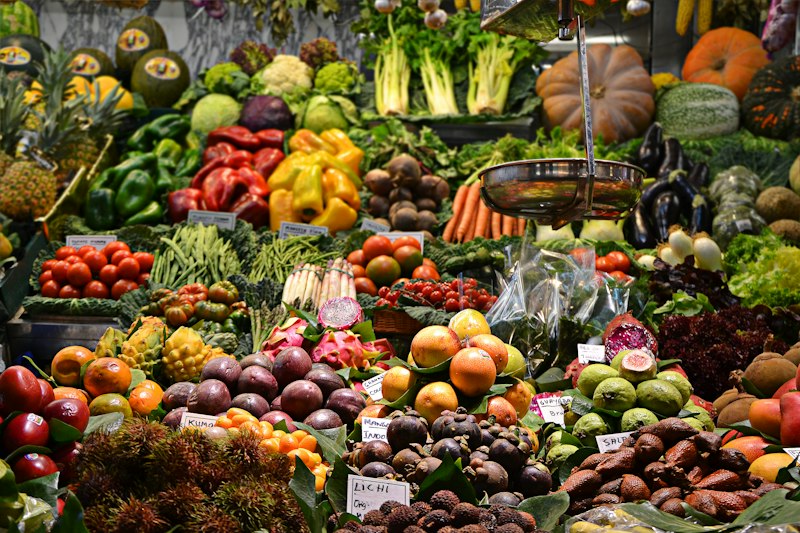
Walk through any supermarket anywhere in the developed world in January, and you will find strawberries, tomatoes, and asparagus �foods that, left to nature, would only appear in late spring or summer. The global food supply chain has achieved something remarkable: it has largely disconnected eating from the seasons. But at what cost? The Chinese tradition of seasonal eating (yin shi shun shi) �eating according to nature's calendar �offers a compelling answer, and modern nutritional science is increasingly backing up this ancient wisdom.
The Philosophical Foundation: Humans as Part of Nature
Seasonal eating is not a diet in the Western sense �it is a fundamental principle of Chinese life cultivation that views human beings as microcosms of the natural world. The foundational text of Chinese medicine, the Huangdi Neijing (Yellow Emperor's Inner Canon, circa 200 BCE), states: "In the three months of spring, all things come forth. One should go to sleep late and rise early... nourish life and do not kill... In the three months of summer, this is the season of flourishing... In the three months of autumn, this is the season of ripening and harvest... In the three months of winter, this is the season of closing and storing."
Each season, according to this framework, is associated with a specific element, organ system, color, flavor, and emotional quality. Eating in harmony with the seasons is understood not just as a way to get optimal nutrition, but as a way to align the body's internal rhythms with the external environment �preventing disease before it starts.
The Five Seasons Framework
Chinese seasonal eating recognizes five seasons (the standard four plus "late summer" �the transitional period between summer and autumn when the earth element dominates). Here is what each season calls for:
Spring (Wood Element �Liver & Gallbladder)
Spring is a time of upward and outward movement �new growth, cleansing, and renewal. Foods should be light, young, and ascending: leafy greens (spinach, dandelion, chives), sprouts, young bamboo shoots, peas, and aromatic herbs like mint and basil. These foods support the liver's natural detoxification processes. The flavor of spring is sour �a small amount of sour foods (lemon, vinegar) helps the liver's upward energetic movement. Cook lightly �steaming, quick sautéing, or eating raw in moderation.
Summer (Fire Element �Heart & Small Intestine)
Summer is fire �maximum yang energy, expansion, and outward activity. Foods should be cooling and hydrating: watermelon, cucumber, tomato, summer squash, bitter melon, mung beans, and lotus root. The flavor of summer is bitter �bitter foods like dandelion greens and bitter melon clear heat from the heart and promote calm amidst the season's intensity. Eat more raw foods in summer than in any other season, but do not overdo it �the digestive fire is weaker in summer because the body directs energy to the surface to dissipate heat. Light soups, salads, and foods with high water content are ideal.
Late Summer (Earth Element �Spleen & Stomach)
This transitional season is about the harvest, nourishment, and centering. Foods should be mildly sweet (the flavor of the earth element), grounding, and slightly more substantial: corn, millet, sweet potato, carrot, squash, chickpeas, and rice. This is the season to eat warm, cooked foods that are easy to digest, supporting the spleen's function of transforming food into energy. Avoid excessive raw, cold, or damp-producing foods (dairy, sugar, fried foods) during this season.
Autumn (Metal Element �Lungs & Large Intestine)
Autumn is a time of contraction, letting go, and turning inward �reflected in the falling leaves. Foods should be warm, moistening, and slightly astringent to counter the dryness (both external and internal) that characterizes the season: pears, apples, lotus root, white fungus (silver ear mushroom), almonds, sesame, honey, and rice congee. The flavor of autumn is pungent/spicy �foods like ginger, garlic, and white pepper in moderate amounts help the lungs disperse energy and clear mucus. Cook foods more thoroughly �baking, roasting, and slow-cooking all support the inward-moving energy of autumn.
Winter (Water Element �Kidneys & Bladder)
Winter is the season of maximum yin �storage, conservation, and deep nourishment. Foods should be warming, dense, and deeply nourishing: root vegetables (turnip, parsnip, rutabaga), black beans, kidney beans, walnuts, lamb, bone broth, and warming spices like cinnamon, star anise, and cloves. The flavor of winter is salty �salt in moderation supports the kidneys, which TCM associates with the water element. Cook foods long and slow �stews, braises, soups, and congees that release deep flavors and nutrients over hours. Foods grown underground (root vegetables) and foods that take time to cook both embody the winter principle of stored, concentrated energy.

What Modern Science Says
Recent research has validated several aspects of traditional seasonal eating wisdom:
- Nutrient density varies by season: A 2024 study published in the Journal of Agricultural and Food Chemistry analyzed the nutrient content of the same vegetable varieties harvested in different seasons. Spinach harvested in its natural spring season contained 38% more vitamin C and 27% more folate than the same variety grown in summer or forced in greenhouses. The researchers concluded that plants grown in their natural season under optimal conditions produce more phytonutrients as part of their natural defense mechanisms.
- Microbiome seasonality: A landmark 2023 study in Nature Communications examined the gut microbiomes of the Hadza people of Tanzania �one of the few remaining hunter-gatherer populations whose diet shifts dramatically with the seasons. Their gut bacterial diversity fluctuated by roughly 30-40% between wet and dry seasons, with specific bacterial strains appearing only during certain seasons when the corresponding foods were available. The researchers hypothesized that this seasonal microbiome cycling �largely lost in industrialized populations eating globalized year-round diets �may be protective against chronic inflammatory diseases.
- Metabolic advantage: A Japanese study published in 2024 in Nutrients followed 450 adults for one year and found that those who ate the highest proportion of locally grown, in-season produce had lower BMIs, better blood glucose control, and lower inflammatory markers (CRP) than those who ate predominantly out-of-season imported produce �even after controlling for total fruit and vegetable intake.
Case Study: Leila, 42, from Vancouver
Leila Montgomery, a 42-year-old yoga teacher in Vancouver, had struggled with seasonal affective disorder (SAD) and recurrent winter weight gain for over a decade. "Every November, my energy would crash, and I would crave carbohydrates nonstop," she says. "By February, I would have gained 10-15 pounds, and my mood was in the basement."
A Chinese medicine practitioner suggested she try eating seasonally �heavy, warming stews with root vegetables in winter instead of the year-round salads she had been eating. "The concept that my body might need different foods in different seasons had honestly never occurred to me. I was eating the same salads and smoothies in January that I ate in July, because I thought that was 'healthy.'"
Leila changed her winter diet to include bone broths, lamb and root vegetable stews, congee with ginger for breakfast, and roasted winter squash. She eliminated cold smoothies and raw salads during the winter months. "The change was profound. Within two weeks, my cravings for junk food disappeared. By the end of that first winter, I had maintained my weight �no gain at all. More importantly, my mood was stable. I actually looked forward to winter for the first time in my adult life."
Three years later, Leila has integrated seasonal eating into her yoga teaching. "The seasonality principle makes so much sense when you experience it. Your body knows what it needs. We just have to learn to listen again."
How to Start Eating Seasonally �Anywhere in the World
- Learn your local seasonal calendar: Every region has a different growing calendar. Visit a farmers' market and ask the farmers what is in season right now. Use seasonal food guides specific to your geographic area �what is seasonal in Melbourne is different from what is seasonal in Montreal.
- Adjust cooking methods with the seasons: In spring, steam lightly. In summer, eat more raw and quickly cooked foods. In autumn, roast and bake. In winter, slow-cook, stew, and braise. The method matters as much as the ingredient.
- Prioritize farmers' markets: Food at farmers' markets is almost always grown locally and in season. Supermarkets create the illusion of seasonless abundance through imports and greenhouse production.
- Preserve the peak: In traditional Chinese households, seasonal eating includes preserving �drying mushrooms in autumn, fermenting vegetables in late summer, freezing berries at their peak in spring. Preserving allows you to extend seasonal foods while honoring the rhythm of the year.
- Don't be rigid: The goal is awareness and alignment, not perfection. Eating an out-of-season tomato in a salad in December will not harm you. But making seasonal foods the foundation of your diet �and adjusting your cooking methods accordingly �can meaningfully shift your health over time.
The Bottom Line
Seasonal eating is one of the most profound yet accessible principles in Chinese wellness philosophy. It requires no supplements, no subscriptions, and no expensive equipment �just a willingness to align your plate with what nature is providing in your corner of the world right now. Modern science is catching up to what Chinese medicine has taught for millennia: our bodies are not isolated from the environment; they are expressions of it. Eating with the seasons is eating in harmony with your own biology.
Comments (0)
Comments loading... (Connect Disqus or Giscus to enable)