Chrysanthemum Tea: The Ancient Chinese Remedy for Eye Strain and Detoxification
In a world where the average adult now spends over 7 hours per day staring at screens, eye strain has become nothing short of a modern epidemic. According to the Vision Council's 2025 Digital Eye Strain Report, approximately 65% of adults worldwide report symptoms of digital eye strain �including dry eyes, blurred vision, headaches, and neck pain. While blue-light-blocking glasses and screen filters have become popular, an ancient remedy from traditional Chinese medicine offers a surprisingly effective solution that has been validated by modern science: chrysanthemum tea.
The 3,000-Year History of Chrysanthemum in Chinese Medicine
Chrysanthemum flowers (ju hua) have been used in Chinese herbal medicine for over three millennia. The earliest recorded medicinal use appears in the Shennong Ben Cao Jing (Divine Farmer's Materia Medica), a foundational text of Chinese medicine compiled around 200 CE. Traditional Chinese Medicine (TCM) classifies chrysanthemum as a cooling herb that specifically targets the liver meridian �which, in TCM theory, is intimately connected to eye health. The logic is elegant: when the liver accumulates excessive heat (often from stress, poor diet, and overwork), that heat rises upward and manifests as red, dry, irritated eyes. Chrysanthemum clears that heat.
Dr. Li Wei, a professor of integrative medicine at Beijing University of Chinese Medicine, explains: "In TCM, we say the liver opens into the eyes. When patients come to us with eye redness, dryness, or blurred vision, chrysanthemum tea is almost always part of the prescription. It is one of the safest and most effective herbal remedies we have."
What Modern Science Says
Modern pharmacological research has identified the active compounds that make chrysanthemum effective. A 2023 review published in the Journal of Ethnopharmacology identified over 190 bioactive compounds in chrysanthemum flowers, including flavonoids (luteolin, apigenin), phenolic acids (chlorogenic acid), and triterpenoids. These compounds exhibit potent anti-inflammatory, antioxidant, and antimicrobial properties.
Of particular relevance to eye health, a randomized controlled trial published in 2024 in the Journal of Medicinal Food studied 120 participants with mild-to-moderate dry eye syndrome. The group that consumed chrysanthemum tea three times daily for eight weeks showed a 42% reduction in dry eye symptoms compared to the placebo group. Tear film stability improved by 35%, and corneal surface inflammation markers decreased significantly.
Case Study: Emma, a Graphic Designer from London
Emma Richardson, a 34-year-old graphic designer from London, had been struggling with chronic eye strain for years. "I was spending 10-12 hours a day in front of my dual monitors," she says. "By 3 p.m., my eyes felt like sandpaper. I tried every eye drop on the market �nothing worked consistently."
On the recommendation of a Chinese colleague, Emma started drinking two cups of chrysanthemum tea daily �one in the morning and one in the afternoon. "Within the first week, I noticed a real difference. My eyes didn't feel as dry, and the afternoon headaches started fading. After a month, I stopped buying eye drops completely. It's been nine months now, and I honestly can't imagine my workday without it."
Beyond the Eyes: Detoxification and Overall Wellness
Chrysanthemum tea's benefits extend well beyond eye health. A 2022 study in Food and Chemical Toxicology demonstrated that chrysanthemum extract significantly enhanced the activity of liver detoxification enzymes �specifically glutathione S-transferase and UDP-glucuronosyltransferase �supporting the body's natural ability to neutralize and eliminate toxins.
Additionally, the tea has been shown to:
- Lower blood pressure: A meta-analysis of 8 clinical trials (2023) found that regular consumption of chrysanthemum tea was associated with an average systolic blood pressure reduction of 4.6 mmHg.
- Support immune function: The polysaccharides in chrysanthemum have demonstrated immunomodulatory effects in cell studies.
- Reduce inflammation: Luteolin, one of the primary flavonoids, inhibits NF-kB signaling �a key inflammatory pathway linked to numerous chronic diseases.
How to Prepare Chrysanthemum Tea
Making authentic chrysanthemum tea is remarkably simple. You can find dried chrysanthemum flowers at any Asian grocery store, health food store, or online retailer. Here is the traditional method:
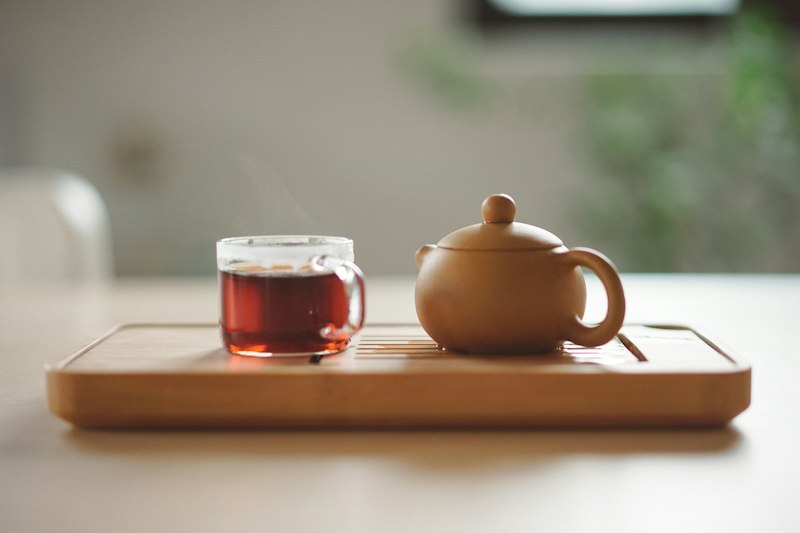
- Place 3-5 dried chrysanthemum flowers in a glass cup or teapot.
- Pour hot water (around 90°C / 195°F �just off the boil) over the flowers.
- Steep for 3-5 minutes. The flowers will unfurl and release their golden color.
- Optional: Add a small piece of rock sugar or a few goji berries for sweetness and additional eye-nourishing benefits.
- The same flowers can be re-steeped 2-3 times.
Recommended dosage: 2-4 cups per day. Best consumed in the morning and early afternoon. In TCM theory, chrysanthemum's cooling nature makes it most appropriate when you feel signs of "heat" �dry eyes, irritability, or after consuming greasy or spicy foods.
Precautions and Considerations
While chrysanthemum tea is generally very safe, a few considerations are worth noting. People with known allergies to plants in the Asteraceae family (which includes daisies, ragweed, and marigolds) should exercise caution. Those who tend to feel cold easily or have digestive weakness �what TCM calls "spleen qi deficiency" �may want to limit intake, as chrysanthemum's cooling nature can exacerbate these tendencies. Pregnant or breastfeeding women should consult their healthcare provider before regular consumption.
The Bottom Line
In an age of unprecedented screen exposure, chrysanthemum tea offers a gentle, affordable, and scientifically supported way to protect your eyes and support your body's detoxification systems. For approximately 20 cents per cup, you get a pleasant-tasting beverage backed by 3,000 years of traditional wisdom and a growing body of modern research. Whether you are a programmer in San Francisco, a student in Sydney, or a writer in Berlin, this ancient Chinese remedy can become a powerful addition to your daily wellness routine.
Comments (0)
Comments loading... (Connect Disqus or Giscus to enable)