Abdominal Breathing: The Chinese Technique to Calm Your Nervous System in Minutes
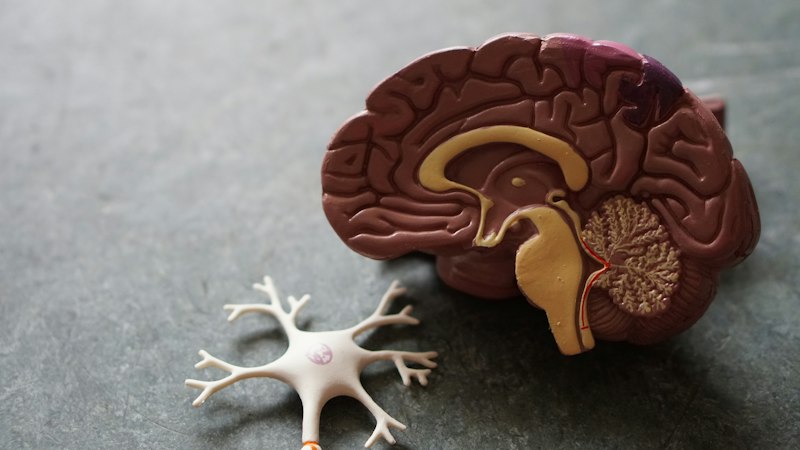
Anxiety disorders are the most common mental health condition worldwide, affecting an estimated 301 million people globally according to the World Health Organization's 2025 update. In the United States alone, the Anxiety and Depression Association of America reports that anxiety disorders cost the economy over $42 billion annually �nearly one-third of the country's total mental health bill. While therapy and medication remain essential tools, an ancient Chinese breathing technique offers immediate, drug-free relief that anyone can access in minutes �and it costs nothing.
The Chinese Roots of Abdominal Breathing
Abdominal breathing �known in Chinese as fu shi hu xi �is not a recent wellness trend. It has been a fundamental practice in Chinese health cultivation (yang sheng) for thousands of years, embedded within Qi Gong, Tai Chi, martial arts, and meditation traditions. In TCM theory, the lower abdomen houses the dan tian, considered the body's primary energy center �the "sea of qi." Breathing deeply into the abdomen is believed to anchor the mind, gather scattered energy, and nourish the body's deepest resources.
Ancient Chinese texts describe abdominal breathing as the breath of a healthy infant �natural, effortless, and centered in the belly. Watch any healthy baby breathe, and you will see exactly this pattern: the belly rises and falls with each breath, while the chest remains relatively still. As we age and accumulate stress, most of us shift into shallow chest breathing, which keeps the sympathetic nervous system in a chronic state of low-grade activation. Abdominal breathing is, in essence, a return to our natural state.
What Happens in Your Body When You Breathe Deeply
The physiological mechanism is elegant and immediate. At the base of your lungs sits your diaphragm �a dome-shaped muscle that separates the chest cavity from the abdominal cavity. During abdominal breathing, the diaphragm descends fully, drawing air deep into the lower lobes of the lungs. This movement stimulates the vagus nerve, the longest cranial nerve in the body and the primary conductor of the parasympathetic "rest and digest" nervous system.
Dr. Patricia Gerbarg, Assistant Clinical Professor of Psychiatry at New York Medical College and co-author of The Healing Power of the Breath, explains: "When you activate the vagus nerve through slow, deep breathing, you trigger a cascade of changes. Heart rate decreases. Blood pressure drops. Stress hormones like cortisol and adrenaline fall. Within literally one to two minutes, your body shifts from fight-or-flight into a calmer, more balanced state. It is one of the fastest ways to change your physiology that exists."
A 2024 neuroimaging study in Biological Psychiatry used fMRI to observe brain activity during abdominal breathing. Researchers found that deep diaphragmatic breathing immediately reduced activity in the amygdala �the brain's fear center �while increasing connectivity between the prefrontal cortex (responsible for rational thought) and the limbic system (the emotional brain). In effect, abdominal breathing helps the thinking brain regain control over the emotional brain.
The Evidence: Measurable Results in Minutes
A 2025 meta-analysis in JAMA Psychiatry examined 27 randomized controlled trials of breathwork interventions for anxiety. The analysis concluded that slow abdominal breathing (5-6 breaths per minute, compared to the typical 12-20) produced:
- A standardized mean reduction in anxiety scores of 0.74 �a large effect size comparable to some pharmacological interventions
- An average heart rate reduction of 8-12 beats per minute within 5 minutes of practice
- A 23% reduction in salivary cortisol levels after a single 10-minute session
- Effects that persisted for up to 2 hours after the breathing session ended
Case Study: David, 36, from Toronto
David Fraser, a 36-year-old high school teacher in Toronto, developed severe anxiety in the wake of the pandemic. "I started having panic attacks before class," he says. "My heart would race, my hands would shake, and I would feel like I couldn't get enough air. Paradoxically, my breathing was the problem �I was hyperventilating without realizing it, taking these shallow, rapid chest breaths."
David's therapist recommended he try abdominal breathing as an immediate intervention during moments of rising anxiety. "She told me to put one hand on my chest and one on my belly. The goal was to make the belly hand move while the chest hand stayed still. The first time I tried it during a panic attack, it felt almost impossible �my body wanted to gasp. But I forced myself to slow down and breathe into my belly."
Within 3 minutes, David felt his heart rate noticeably drop. "It was like a switch flipped. The panic didn't disappear completely, but it became manageable. I could think again. Now, six months later, I practice 10 minutes of abdominal breathing every morning before school. I have not had a panic attack in four months. When I feel anxiety building, I know I have a tool that works �and it is always with me."
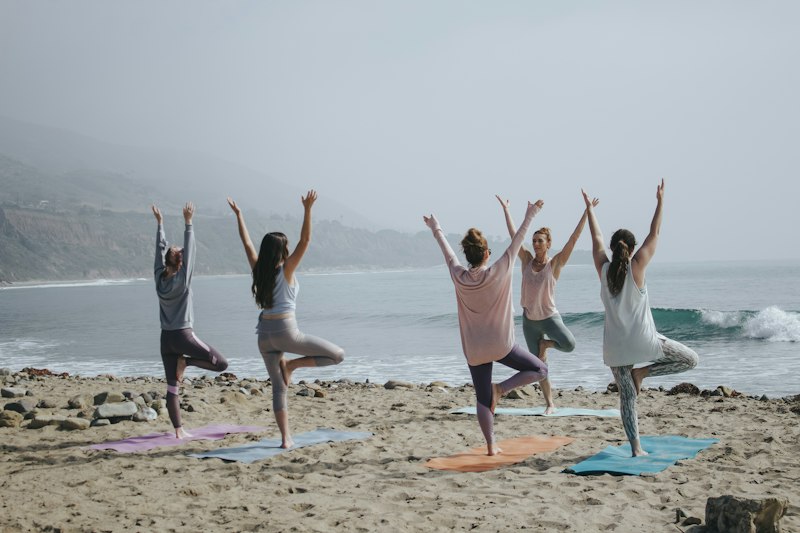
How to Practice Abdominal Breathing: The 4-7-8 Method
The most well-researched protocol for abdominal breathing is a Chinese-inspired variation of the technique Dr. Andrew Weil popularized as "4-7-8 breathing." Here is how to do it:
- Position: Sit comfortably with your spine straight, or lie on your back. Place one hand on your chest and one on your lower belly, just below the navel.
- Inhale (4 seconds): Breathe in slowly and deeply through your nose. Focus entirely on sending the breath into your belly �the hand on your belly should rise while the hand on your chest remains nearly still. Feel the breath reach all the way to your dan tian.
- Hold (7 seconds): Gently hold the breath. This pause allows oxygen to fully diffuse into your bloodstream and gives your nervous system time to register the calm state. If 7 seconds feels too long, start with 4 and build up.
- Exhale (8 seconds): Exhale slowly and completely through your mouth, making a soft "whoosh" sound. Feel your belly deflate. The extended exhale is crucial �it maximally stimulates the vagus nerve and activates the parasympathetic response.
- Repeat: Complete 4-8 cycles. Each full cycle takes 19 seconds. Four cycles take just over a minute. Eight cycles take about 2.5 minutes.
When to practice: First thing in the morning to set your nervous system's baseline for the day. Before bed to promote deep sleep. In moments of acute stress �before a difficult conversation, a presentation, or when you feel panic rising. Any time you notice yourself breathing shallowly from your chest.
Why This Works So Fast
Unlike many wellness interventions that require weeks or months to produce effects, abdominal breathing works in minutes because it directly interfaces with the autonomic nervous system. You cannot consciously command your heart to beat slower or your adrenal glands to produce less cortisol �but you can consciously control your breath. And because the respiratory system is intimately linked to the autonomic nervous system, changing your breath changes everything else. It is the one backdoor into the involuntary nervous system that is always available to you.
The Bottom Line
In a medical landscape where anxiety treatment often involves monthly therapy bills and daily medication, abdominal breathing stands out for its immediacy, accessibility, and zero cost. It requires no equipment, no prescription, and no special training �just the willingness to breathe into your belly for a few minutes. This ancient Chinese practice, now validated by modern neuroscience, is quite literally the most accessible anti-anxiety tool in existence. It is always with you, it always works, and it takes just minutes. In a world of complexity, sometimes the simplest answer is also the best one.
Comments (0)
Comments loading... (Connect Disqus or Giscus to enable)